
My name is Marianela Alvarado Murillo. I study odontology I love odontology is my passion. I often read magazine of odontology is very very interesting. I live in Heredia, my parents live in Guanacaste. They are my life. I always go to the gym because it is very important for my health. I like to dance folcklore, I like latin music but I do not rock music. When I was a child, I played with my mother. I am a humble person, I come of a rural zone. I am responsible, I hate being late to class. I am a happy person.
It is very important to know the different types of relationships for example the family, friends, boyfriend, girlfriend, boss, teammate, classmate. However it should be known that there are many different things between men and women for example the different skills.

In the media
This week we saw that there are ways to communicate for example social networks, it is important to know the different types of social networks because we know the advantages and disadvantages they generate.
 Disadvantages
Advantages

- Distraction.
- Addiction.
- Obsession .
- Theft of information.
Advantages
- Easy communication.
- Advertising medium.
Today many people use different media to be informed about events that happening; for example reading newspapers and magazines. On the other hand people use technology for example digital books, news websites, message boards.
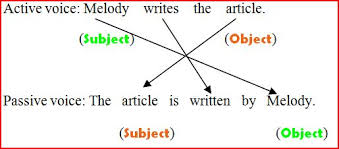
Passive Voice
Present: s + is/are/am + pp + c
For example:
- I love English. English is loved by me.
- She eats apples. Apples are eaten by her.
- My father buys flowers. Flowers are bought by my father.
- My family cooks dinner. Dinner is cooked by family.
For example:
- I wrote a letter. The letter was written.
- My sister lost the keys. The keys were lost by my sister.
- I wrote the book. The book was written by me.
Home sweet home
This week we saw the types houses existing with its positive and negative characteristics. Is very important have present the house of our dreams because it is beautiful to dream what we want in the future. For example I dream have my house, my sons, my profession and I will get married. I will not be far from get married, my boyfriend and I we will be married inside two years.

This house is very spacious, too expensive, comfortable luxurious huge and charming. Who does not dream of a house like this ?

I do not like this house because it is depressing insecure dark tiny and old-fashioned, is very very awful.
Present continuous, Be going to or Will

For example:
My sister is running in with us in the mornings because next year going to compete to another country. She is going to the beach next week with friends a 30 km competition. She is starting to fulfill his dream because when she was a child she dreamed be athlete. She will to win the competition.
Cities
This week we saw comparatives and superlatives is important to use these themes in our life.
Comparatives
|
Superlatives
|
|
One-syllable
adjectives
|
+ -er than
|
+ the –est
|
Two (or
more) syllable adjectives
|
More
+ adjectives + than
|
The
most + adjective
|
Two-syllable
adjectives ending in -y
|
Remove –y and add íer then
|
the –iest
|
Irregular
adjectives (Ex: bad)
|
Worse
than
|
the worst
|

For example:
The image on the left is more expensive than the image on the right, however the picture on the right is the warmest and hottest but the picture on the left is the most dangerous because there is more traffic and bad people.
Wealth

Success
Succeed
Successful
Success doesn't come easily.
You have to work hard to succeed in life.
Bill Gates is a very successful man.
Question tags
To make question tags, use the main verb / an auxiliary verb.
If there is no auxiliary verb, the question tag uses the main verb / do, does or did.
If the question is positive, the question tag is negative / positive.
If the question is negative, the question tag is negative / positive.
For example:
You work in fashion, don't you?
We didn't meet last year, did we?
She has been to Saudi Arabia, hasn't she?
They wouldn't like a drink, would they?
You will be here tomorrow, won't you?
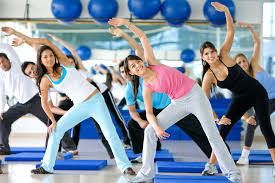 I like to exercise in the mornings.
Verbs followed by infinitives (to)
Spare time
In our spare time can do different activities, for example swimming, bicycling, dancing, puzzles. I like to play sports in my spare time because I get distracted and feel cheerful and positive.
I like to go dancing on the weekends. 
Present perfect and present perfect continuous
Use the present perfect continuous to talk about:
- Unfinished actions which started in the past and continue in the present.
I have been reading your novel. (I have not finished)
I have read your novel. (I hvae finished it)
- Recently finished activities with present results that often can be seen.
Why are you hot?
I have been running.
- Situations that focus on the activity and not the result.
I have been studying. (This is why I have not seen you)
Present perfect: indifinite past
I have gone to Tamarindo before.
I have flown several times in my life.
Since / For
I have worked at ULACIT since 2011.
I have lived in the same house for 20 years.
Gerunds and infinitives
Verbs followed by gerunds (ing)
Gerunds
|
For example
|
Enjoy
|
I
enjoyed watching the games.
|
Avoid
|
She
is avoiding eating fast food.
|
Imagine
|
I
have imagined travelling around
the world.
|
Consider
|
I
am considering buying a car.
|
Like
|
I
like eating pizza.
|
Prefer
|
She
prefers watching the movie.
|
Verbs followed by infinitives (to)
Infinitives
|
For example
|
Want
|
I
want to go.
|
Seem
|
She
seems to understand.
|
Offer
|
She
has offered to help me.
|
Expect
|
I expect
to see you.
|
Like
|
I
like to eat pizza.
|
Prefer
|
She
prefers to watch the movie.
|
Travel tales

Past Perfect
Sentence:
Subject + had + past participle + complement.
Question:
Had + subject + past participle + complement.
For example:
You had studied english before you moved to New York.
Had you studied english before you moved to New York?
Uses of like
Use like to talk about:
To like: I like to pizza.
Would like: (want) I would like a window seat, please.
Look like (physical appearance)
Be like (personality)
Feels like
Smells like
Tastes like
Sounds like
Live
Lifelong learning
Things a
teacher does
|
Things a
teacher is
|
Loses his or her temper
|
Patient
|
Talks slowly
|
Boring
|
Asks difficult questions
|
Knowledgeable
|
Punishes students who
behave badly
|
Understanding
|
Gives clear answer to
questions
|
Inspiring
|
Frightening
|
|
Open-minded
|
Habitual past used to / would
When I was a child I used to like play rayuela with my friends but I didn't use to play soccer because I don't like. I used to like math but spanish was difficult for me. I used to walk three km from school in the mornings. I didn't used to arrive late because it was unpleasant for me.
After a stative verb use: USED TO
For example:
Live
Have
Like
Hate Used to/
Believe Didn’t used to
Know
Need
Be
Go
Make
Say
Read Used to/
Drive Would
Walk
Write
What does it take to be successful?
First, be successful it’s a thing that becomes
depending of the personality of the person and also the form of seeing
successes. I really think that success is when you know do what do you want in
life independently of what others people wait of you. Second, the important thing is that you feels a
success person and ignore it other people think that success becomes in money
or materials things. To be successful is a life style, when you decide to do
your best every time not only talking about your work or study, in everything
you decide to do in your life a successful person gives their best. Third, two characteristics the person successful
is: this person hard work every day and
these people always have to learn something new. Finally, to be successful you
have to take into account the habits of highly effective people: be proactive,
begin with the end in mind, set first things first, think win-win, and seek
first to understand and then be understood, synergy, sharpen the saw.
¡Where one door closes, another opens!
If + Simple Present, + Simple Future
Use
Conditional Sentences Type 1 refer to the future. An action in the future will only happen if a certain condition is fulfilled by that time. We don't know for sure whether the condition actually will be fulfilled or not, but the conditions seems rather realistic – so we think it is likely to happen.
Example:
If I have enough time, I'll watch the football match.
I may have time to watch the match but I'm not sure about it.
Conditional Sentence Type 2:
Often called the "unreal" conditional because it is used for unreal impossible or improbable situations. This conditional provides an imaginary result for a given situation. It is very unlikely that the condition will be fulfilled.
If + Simple Past, + would + base verb
Were / Was
In conditional type 2, we usually use in the if clause "were" instead of "was" even if the pronoun is I, he, sheor it. "were" here is a subjunctive form.
Example:
If I were a millionaire, I would buy a castle.
Use
Conditional Sentences Type 2 refer to an action in the present that could happen if the present situation were different. I don't really expect the situation to change because it is very unlikely.
Example:
If I had a lot of money, I would travel around the world.
Conditional Sentence Type 3
It is impossible that the condition will be met because it refers to the past.
If + Past Perfect, + would + have + Past Participle
Use
Conditional Sentences Type 3 refer to situations in the past. They express hypothetical results to past given situations.
Example:
If he had been careful, he wouldn't have had that terrible accident.
Sometimes in the past, he was careless. He drove so fast. So he had a terrible accident.
Conditional sentences
Conditional sentence type 1:
If + Simple Present, + Simple Future
Use
Conditional Sentences Type 1 refer to the future. An action in the future will only happen if a certain condition is fulfilled by that time. We don't know for sure whether the condition actually will be fulfilled or not, but the conditions seems rather realistic – so we think it is likely to happen.
Example:
If I have enough time, I'll watch the football match.
I may have time to watch the match but I'm not sure about it.
Conditional Sentence Type 2:
Often called the "unreal" conditional because it is used for unreal impossible or improbable situations. This conditional provides an imaginary result for a given situation. It is very unlikely that the condition will be fulfilled.
If + Simple Past, + would + base verb
Were / Was
In conditional type 2, we usually use in the if clause "were" instead of "was" even if the pronoun is I, he, sheor it. "were" here is a subjunctive form.
Example:
If I were a millionaire, I would buy a castle.
Use
Conditional Sentences Type 2 refer to an action in the present that could happen if the present situation were different. I don't really expect the situation to change because it is very unlikely.
Example:
If I had a lot of money, I would travel around the world.
Conditional Sentence Type 3
It is impossible that the condition will be met because it refers to the past.
If + Past Perfect, + would + have + Past Participle
Use
Conditional Sentences Type 3 refer to situations in the past. They express hypothetical results to past given situations.
Example:
If he had been careful, he wouldn't have had that terrible accident.
Sometimes in the past, he was careless. He drove so fast. So he had a terrible accident.
Why is it
important for elderly people to be active?
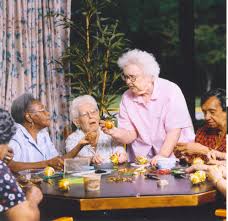
Elderly
people get to a stage in which their muscles do not respond as they did when
they were Young. However, if they are usually active, they can have a better
quality of life. So if they exercise, dance or walk, their mind is more active
and their organism feels better. This is the reason why nowadays there are
groups of elderly people, so they get together, share experiences or make
different activities. To exercise is an important factor to keep a good self- steem.
If
elderly people want to help their memory and reduce the possibilities of
suffering Alzheimer, it is recommended to read, play word puzzle and work handy
crafts. It is not only recommended that they make different activities but also
that those people who are charge, give them healthy food. Finally, the elderly
are very special people, full of love and wisdom.

No hay comentarios:
Publicar un comentario